
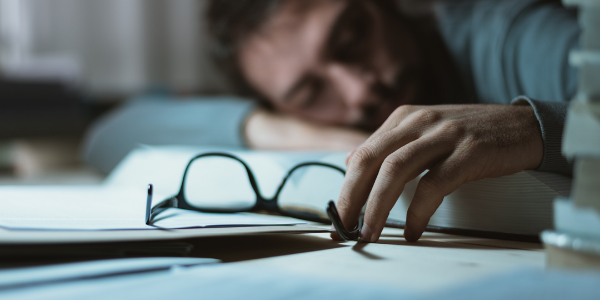
A recent National Geographic feature challenged a number that many of us have treated as gospel for decades: eight hours of sleep.
The article argued that even when adolescents and adults log the recommended duration, modern stressors, inconsistent schedules, and late-evening light exposure can blunt the deep, restorative phases of sleep, leaving the brain fatigued despite the clock.
For families navigating high school and college, that distinction matters.
Sleep quality for students is not simply a wellness preference. Sleep is the engine behind executive functioning, emotional regulation, and academic performance.
Why Sleep Quality for Students Matters
At Novella Prep, we see the consequences of compromised sleep almost daily.
Students juggling AP coursework, athletics, college visits, and screen-saturated evenings frequently arrive at our sessions describing fog, irritability, and stalled productivity.
Their parents often assume an organizational problem; the underlying issue is biological.
Carskadon (2011) demonstrated that adolescent circadian rhythms shift later during puberty, making early bedtimes physiologically difficult and causing chronic insufficient sleep when school starts before 8:30 a.m.
The American Academy of Pediatrics later codified that finding in a policy statement urging delayed school start times (Owens, 2014).
When schools and households ignore that biology, students pay attention, mood, and grades.
Why Eight Hours of Sleep Is Not Always Enough
Quality compounds the problem.
Hirshkowitz et al. (2015) recommended seven to nine hours for adults and eight to ten for teenagers, but the same panel emphasized that consolidated, uninterrupted sleep delivers the slow-wave activity required for memory consolidation.
Walker (2017) summarized decades of neuroscience showing that REM and slow-wave sleep are not interchangeable; both phases are essential for learning and emotional balance.
Both phases get disrupted by alcohol, late caffeine, blue light from devices, and the stress hormone cortisol, which remains elevated when teens cycle through evening homework, social media, and worry about the next day’s tests.
How Families Can Build Better Sleep Into the Academic Plan
What does this mean for families?
First, treat sleep as part of the academic plan, not an afterthought.
We coach students to anchor a consistent bedtime and wake time, even on weekends, because circadian alignment improves daytime alertness and lowers anxiety (Wittmann et al., 2006).
Second, audit the last ninety minutes of the day.
Replace screens with reading, light stretching, or a warm shower.
Third, name the trade-offs honestly.
A student who chooses a third hour of homework over sleep often loses more efficiency the next day than the work gained.
Sleep quality for students is a study strategy.
Why School Start Times Matter for Student Sleep
Schools can do their part as well.
Districts that have moved start times to 8:30 a.m. or later have reported gains in attendance, reductions in tardiness, and small but meaningful increases in GPA (Wheaton, Ferro, & Croft, 2018).
Parents and counselors who advocate for these shifts are not chasing convenience; they are responding to evidence.
How to Know If a Student’s Sleep Is Not Restorative
We also encourage families to look beyond the headline.
Eight hours remains a useful target, but quality determines whether that target translates into restoration.
Sleep diaries, wearables, and routine pediatric check-ins can flag fragmented sleep before it becomes a crisis.
Persistent fatigue should prompt a conversation with a primary care provider, especially when accompanied by mood changes or declining academic engagement.
Why Student-Athletes Need More Sleep
Athletes deserve a special note.
Mah, Mah, Kezirian, and Dement (2011) reported that extending sleep to ten hours improved reaction time, mood, and competitive performance among collegiate basketball players.
Our student-athletes routinely log earlier and harder mornings than their peers; protecting their sleep during travel weeks and tournament cycles is not pampering — that is performance science.
We coach families to negotiate practice and homework loads accordingly, especially during recruiting visits where sleep deprivation can quietly undercut a student’s presentation.
Reframing Sleep as Performance Fuel
Finally, we want to acknowledge the cultural pressure.
Students absorb messages that achievement requires sacrifice, and sleep often becomes the first casualty.
Reframing rest as performance fuel changes the conversation.
A well-rested student writes a sharper essay, recovers faster from a hard practice, and shows up to a college interview with the warmth and presence that admissions officers actually remember.
How Novella Prep Supports Student Sleep and Executive Functioning
If a Novella Prep family wants help building this into a study plan, our coaches integrate sleep targets into weekly schedules alongside coursework, test prep, and extracurricular pacing.
Executive functioning is downstream of biology, and we treat it that way.
Final Takeaway: Sleep Quality Sleep quality for students is the Multiplier
The National Geographic piece deserved its viral moment because it gently corrected a number we had all stopped questioning.
Eight hours is the floor, not the ceiling, and quality is the multiplier.
For a generation already managing record levels of academic and social pressure, that distinction may be the most practical wellness intervention we can offer.
References
Carskadon, M. A. (2011). Sleep in adolescents: The perfect storm. Pediatric Clinics of North America, 58(3), 637–647.
Hirshkowitz, M., Whiton, K., Albert, S. M., Alessi, C., Bruni, O., DonCarlos, L., … Hillard, P. J. A. (2015). National Sleep Foundation’s sleep time duration recommendations. Sleep Health, 1(1), 40–43.
Mah, C. D., Mah, K. E., Kezirian, E. J., & Dement, W. C. (2011). The effects of sleep extension on the athletic performance of collegiate basketball players. Sleep, 34(7), 943–950.
Owens, J. (2014). Insufficient sleep in adolescents and young adults: An update on causes and consequences. Pediatrics, 134(3), e921–e932.
Walker, M. (2017). Why we sleep: Unlocking the power of sleep and dreams. Scribner.
Wheaton, A. G., Ferro, G. A., & Croft, J. B. (2018). School start times for middle school and high school students — United States, 2011–12 school year. MMWR Morbidity and Mortality Weekly Report, 64(30), 809–813.
Wittmann, M., Dinich, J., Merrow, M., & Roenneberg, T. (2006). Social jetlag: Misalignment of biological and social time. Chronobiology International, 23(1–2), 497–509.